
Intumescent Fireproof Coating
A steel protection system specified by fire resistance period, steel section factor and dry film thickness — from primer to topcoat.
- Ratings
- R30 – R120
- Design basis
- Hp/A + DFT
- System
- Primer + coating + topcoat
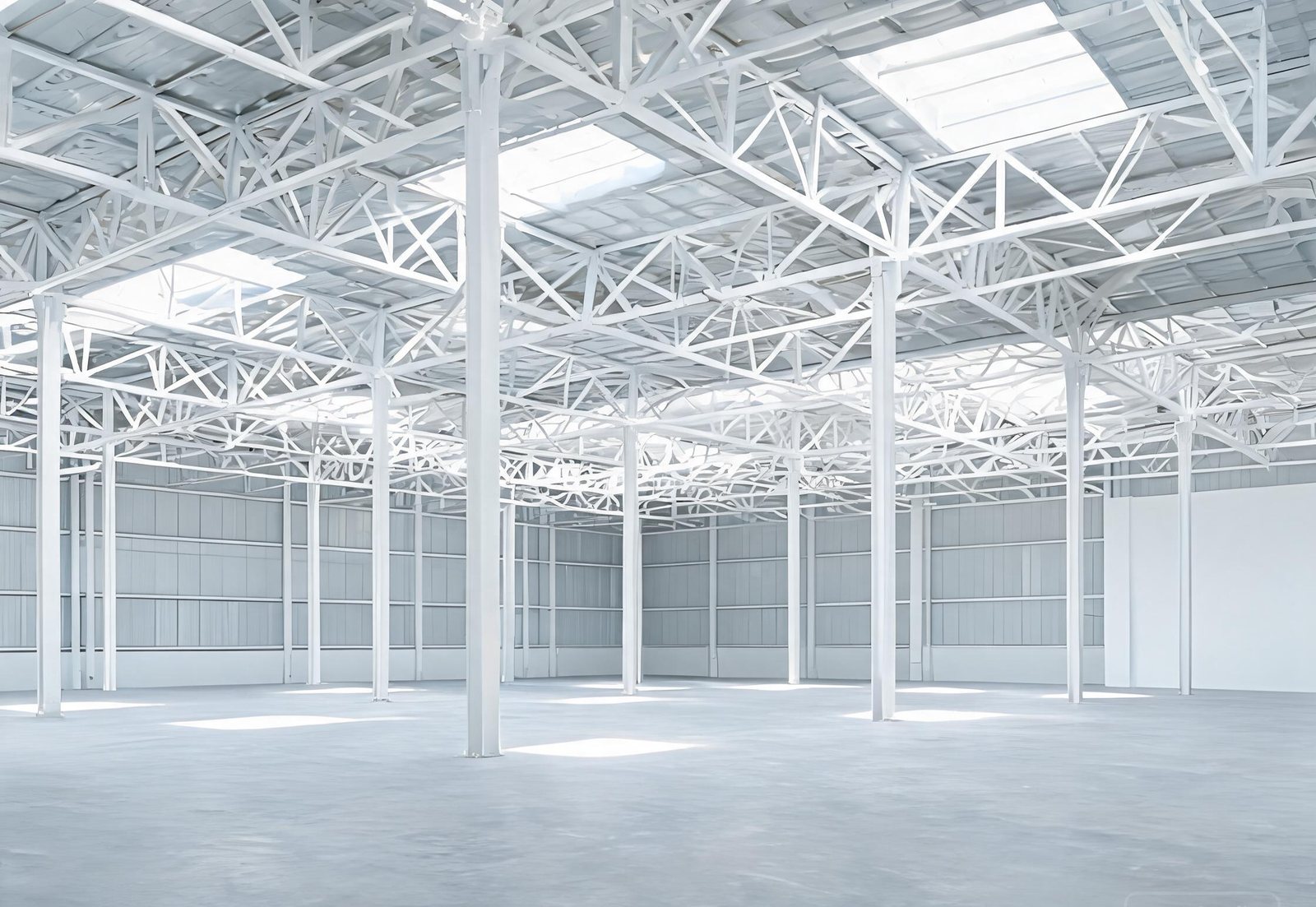
Overview
Structural steel loses strength as it heats. A fire resistance period — R30, R60, R90 or R120 — defines how long the element must maintain its load-bearing function under a standard fire exposure. Intumescent coatings provide that protection as a thin, architectural finish.
Intumescent fireproof coating is a reactive paint applied to structural steel. When exposed to fire, it expands into an insulating char layer that slows the temperature rise of the steel, preserving its load-bearing capacity for the specified period.
The coating thickness is not chosen by rating alone. It depends on the steel section factor (Hp/A), the required fire period, the specific product's test data and the substrate condition. A complete system also considers the primer and topcoat, because compatibility affects adhesion and durability.
Product benefits
- Thin-film finish preserves the appearance of exposed steel
- R30, R60, R90 and R120 fire resistance options
- Suitable for internal and protected external environments
- System approach covers primer, coating and topcoat
- DFT and batch records support project handover
VIVON supplies the coating as part of a documented system: surface preparation requirements, primer, intumescent build-up, topcoat, dry film thickness records and test documentation. Site application quality is checked against the specified DFT.
Typical specifications
Values below are indicative ranges. Final specifications are confirmed against project drawings, loads and local requirements.
| Fire resistance | R30 / R60 / R90 / R120 (30–120 minutes) |
|---|---|
| Substrate | Structural steel, prepared to the specified standard |
| Primer | Compatible anti-corrosive primer, project-specific |
| Intumescent coating | Solvent-based or water-based, selected by exposure |
| Dry film thickness | Calculated from Hp/A, fire period and test data |
| Topcoat | Interior or exterior grade, colour on request |
| Environment | Internal, sheltered external or exposed — confirmed per system |
| Documentation | TDS, SDS, fire test data and DFT records |
Selection guidance
Include the following information in an inquiry so the correct system can be confirmed without a second round of questions.
- Required fire resistance period and test standard
- Steel section factor Hp/A for each member
- Internal, sheltered or external exposure
- Primer compatibility and surface preparation
- Topcoat colour and gloss requirements
- Application method and site conditions
- Inspection and DFT verification regime
Typical applications
Frequently asked questions
What is Hp/A and why does it matter?
Hp/A is the section factor: the heated perimeter divided by the cross-sectional area of the steel member. Members with a higher Hp/A heat faster and generally need a greater coating thickness to achieve the same fire resistance period.
Can the coating be overpainted?
Yes, when the topcoat is compatible with the intumescent system. The topcoat provides colour, gloss and additional weather resistance. Using an incompatible product can affect adhesion or the intumescent reaction, so the full system should be specified together.
Is the system suitable for outdoor steel?
Exterior use depends on the product system and topcoat. Sheltered external and fully exposed conditions require different approvals and maintenance assumptions. The exposure category should be stated in the inquiry so the correct system can be confirmed.
Specify intumescent fireproof coating for your project.
Send the building type, location, drawings and required performance. You will receive a coordinated recommendation and quotation.