
FRP Corrosion-Resistant Panels
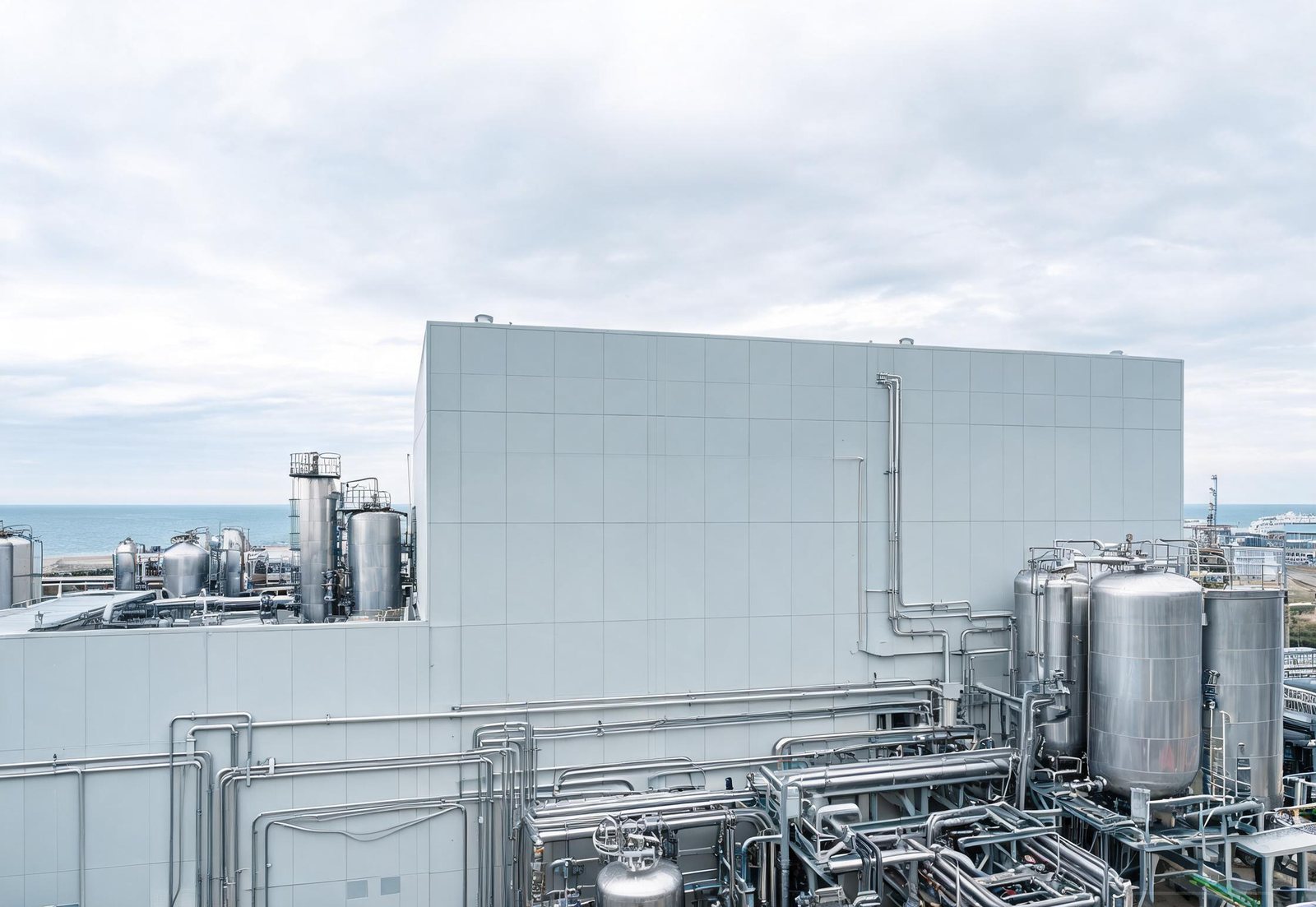
Composite roof and wall panels engineered for chemical plants, coastal sites and high-humidity industrial buildings where metal cladding would corrode.
- Resin system
- Isophthalic / vinyl ester
- Environment
- Acid · alkali · salt spray
- Format
- Roof & wall profiles
Overview
In corrosive environments, perforated metal cladding creates a maintenance cycle: cut edges rust, fasteners corrode and the building envelope becomes a recurring repair item. FRP panels remove the steel substrate from the exposed surface and provide a composite barrier that is inherently resistant to many chemical atmospheres.
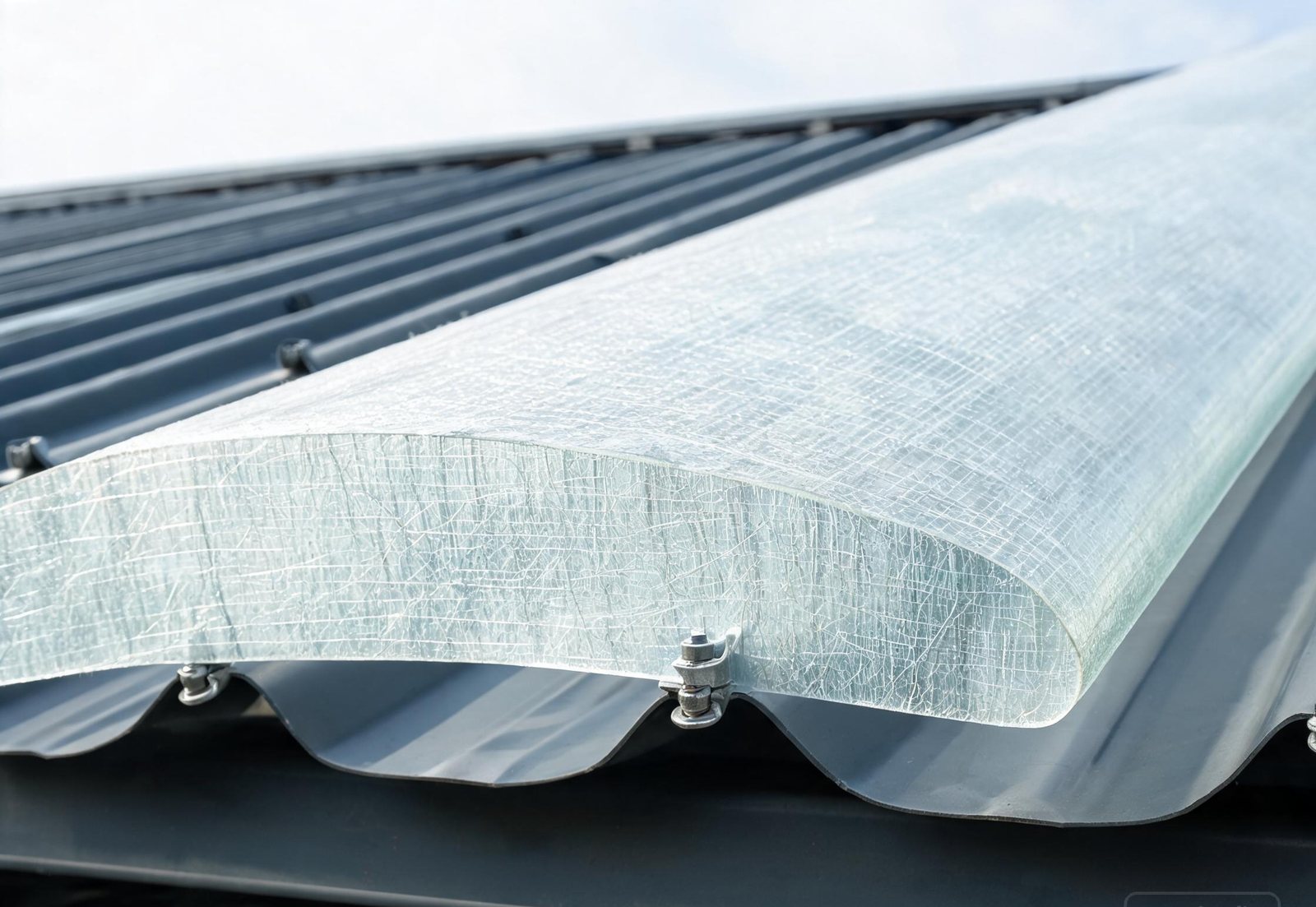
FRP corrosion-resistant panels are glass-fibre reinforced composite sheets with a resin-rich surface veil, selected for resistance to acids, alkalis, salt spray and humid industrial atmospheres.
Performance is governed by the resin system, glass content, surface veil and thickness. Isophthalic polyester is used for moderate chemical exposure; vinyl ester is selected for stronger acids, alkalis and higher temperatures. A resin-rich surface veil improves resistance at the exposed face and reduces fibre print-through.
Product benefits
- Resists acid, alkali and salt-spray attack without rusting
- Long maintenance intervals compared with painted steel
- Suitable for roof, wall or localised corrosion protection
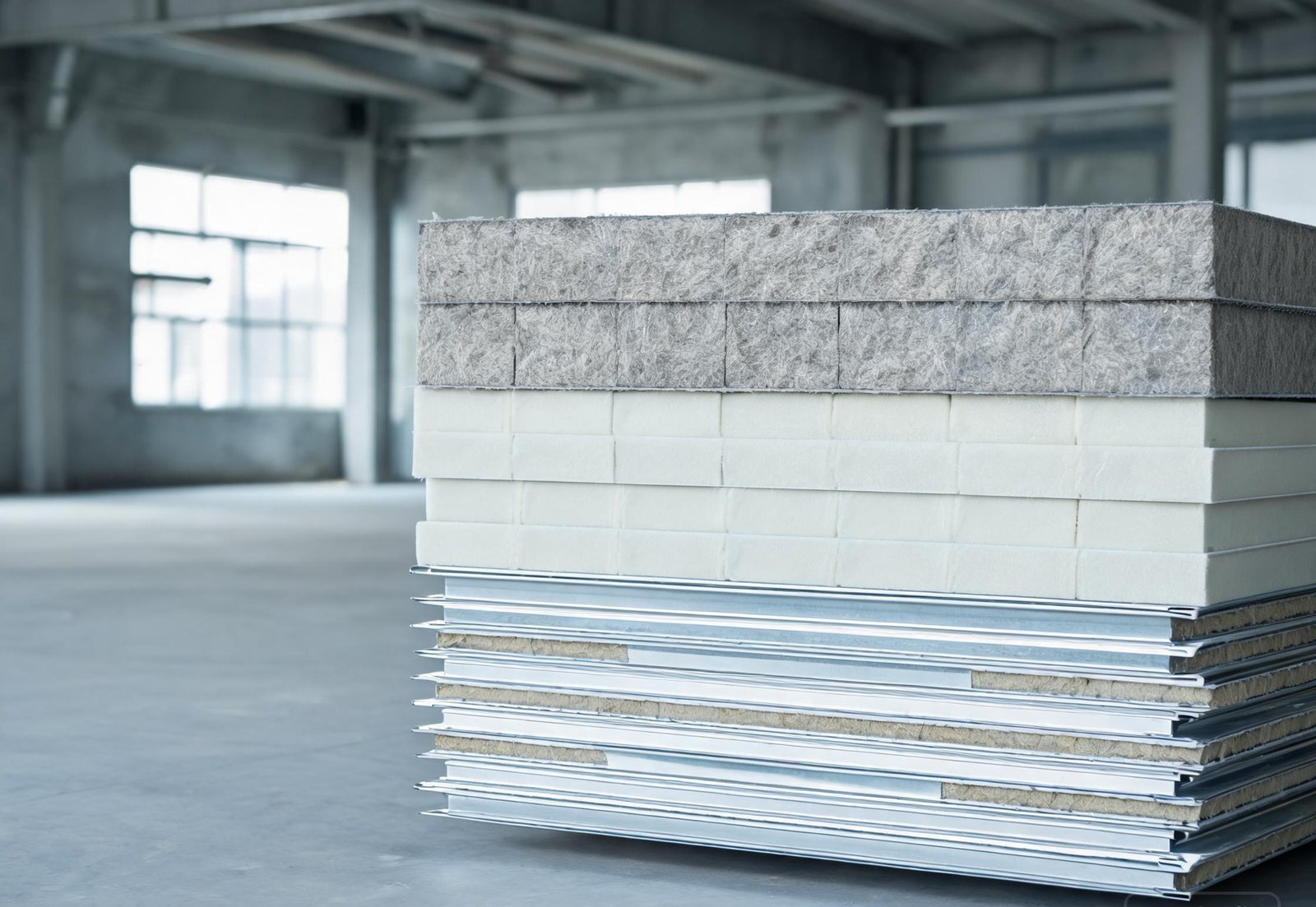
- Can be combined with insulation and structural steel systems
- Surface veil improves chemical resistance and appearance
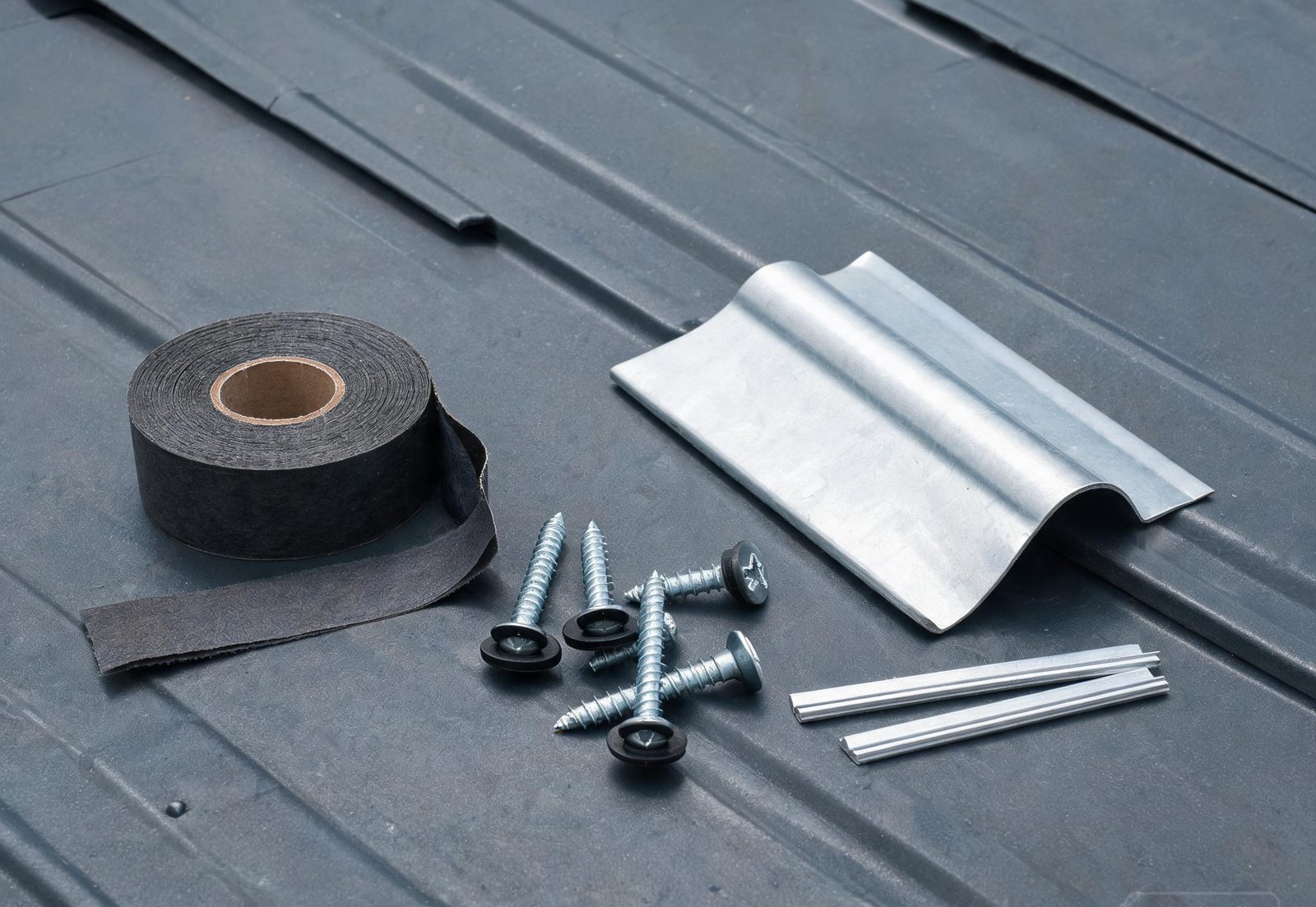
VIVON reviews the chemical exposure, concentration, temperature and cleaning regime before recommending a build-up. Panels can be supplied as roof or wall profiles, with matching accessories selected for the same environment.
Typical specifications
Values below are indicative ranges. Final specifications are confirmed against project drawings, loads and local requirements.
| Resin system | Isophthalic polyester, vinyl ester or project-specific resin |
|---|---|
| Reinforcement | Glass-fibre mat and roving; glass content by project |
| Thickness | 1.5–3.0 mm typical; confirmed against span and exposure |
| Surface | Resin-rich veil, UV-resistant topcoat options |
| Colour | Pigmented through the resin; custom colours on request |
| Fire performance | Flame-retardant grade available |
| Profile | Matched to metal roof and wall profiles |
| Service temperature | Confirmed against resin system and chemical exposure |
Selection guidance
Include the following information in an inquiry so the correct system can be confirmed without a second round of questions.
- Chemical species, concentration and contact temperature
- Splash, vapour or continuous immersion exposure
- Cleaning chemicals and frequency
- UV exposure and required colour stability
- Fire performance and smoke requirements
- Structural span, wind load and fixing details
- Compatibility with flashings, sealants and fasteners
Typical applications
Frequently asked questions
Which resin system should be used?
The resin depends on the chemical exposure and temperature. Isophthalic polyester suits many moderate industrial atmospheres; vinyl ester is preferred for stronger acids, alkalis and higher temperatures. Provide the chemical list, concentration and temperature so the resin can be confirmed.
Can FRP panels replace metal sheets directly?
Yes, when the profile and thickness are matched to the existing roof or wall system. The panels are installed with compatible fasteners, closures and sealants. Structural span and wind uplift should be checked because FRP stiffness differs from steel.
How is chemical resistance verified?
Resistance is assessed against the specific chemicals, concentration and temperature of the project. VIVON can provide material data and, where required, arrange exposure testing or project-specific documentation before supply.
Specify frp corrosion-resistant panels for your project.
Send the building type, location, drawings and required performance. You will receive a coordinated recommendation and quotation.