“Corrosion resistant” is a category, not a specification. Two panels carrying the same description can behave very differently 500 metres from the sea, because salt deposition, humidity and UV exposure change the failure mechanism.
Define the exposure zone
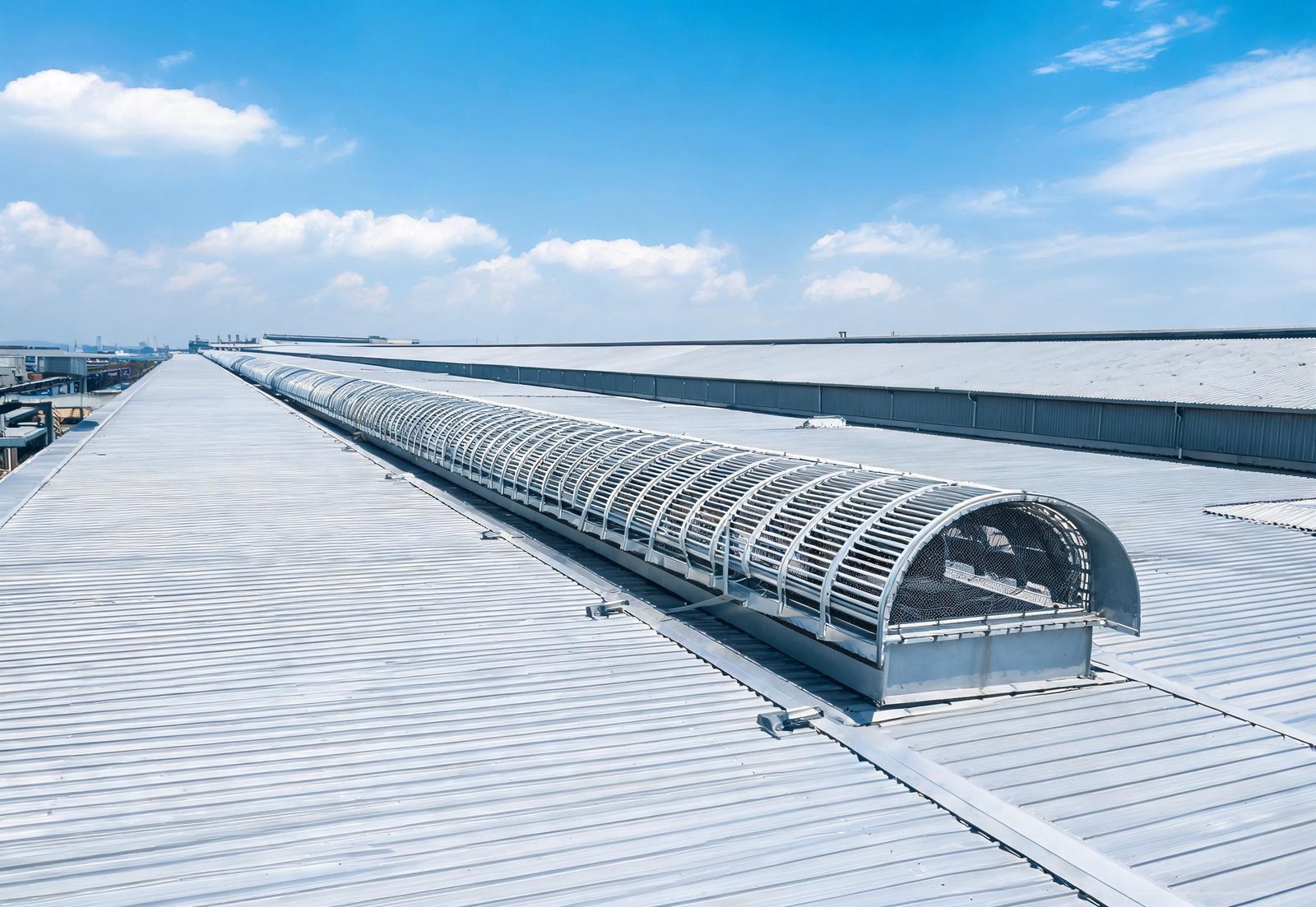
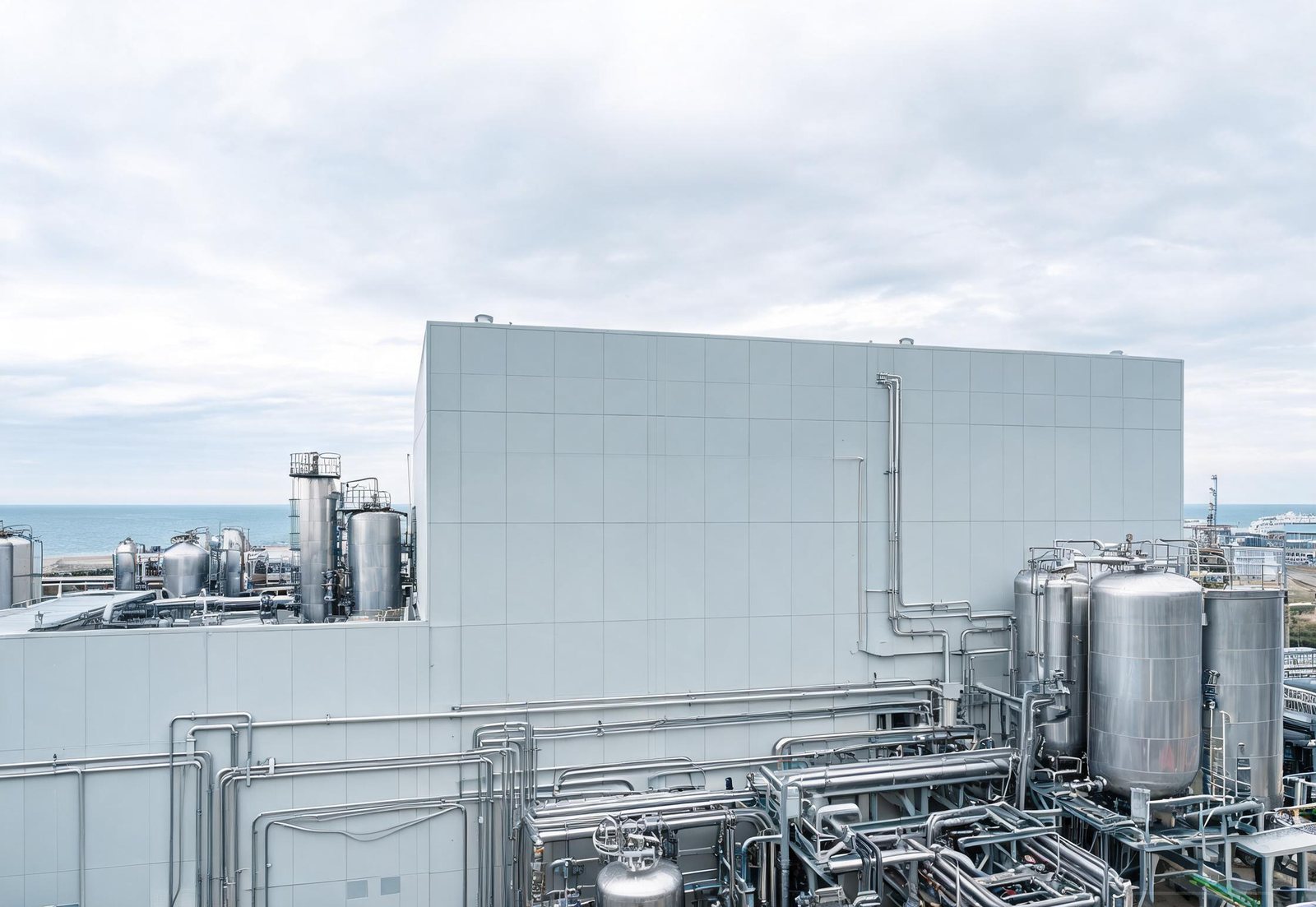
Distance from the shoreline, prevailing wind, industrial emissions and washing frequency all matter. A coastal site with regular rain washing is a different environment from a sheltered estuary with salt fog and little rain.
Where the project has a corrosion classification or a client standard, use it to set the resin family and the barrier thickness before discussing price.
Resin, veil and barrier
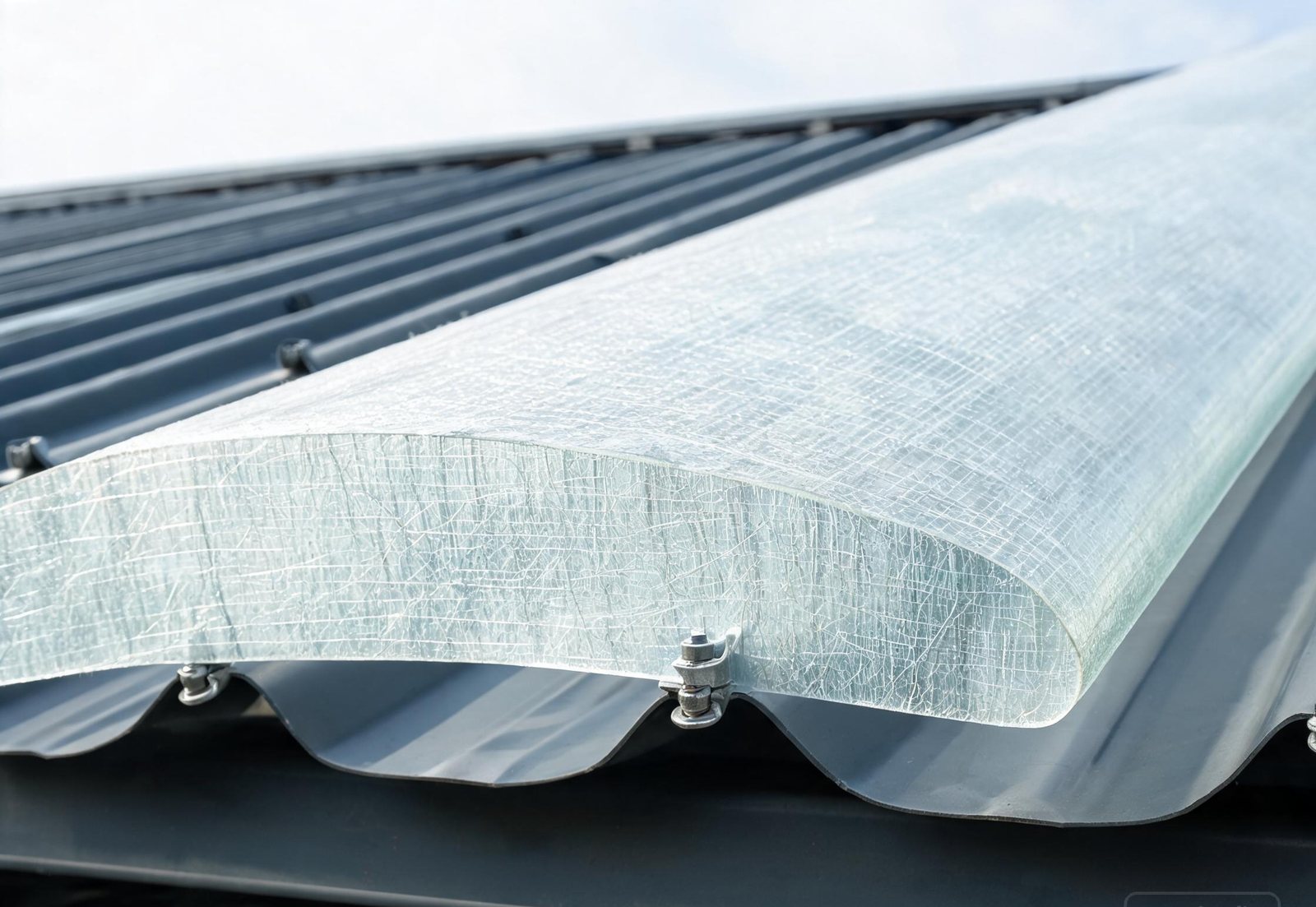
Vinyl ester resin with a C-glass surface veil is the common starting point for splash and salt-spray zones. For stronger chemical exposure, a barrier layer and a higher veil weight may be required.
Cut edges and drilled holes are the most vulnerable points. They should be sealed with a compatible resin or covered by a profile that keeps water out of the laminate.
Details that fail first
Fasteners, flashings and sealants usually fail before the panel. Specify stainless or coated fasteners with EPDM washers, avoid dissimilar-metal contact, and check that sealants are compatible with the panel surface.
A maintenance schedule is part of the specification. Periodic washing removes salt deposits and extends service life more reliably than a thicker panel alone.
Key takeaways
- Translate the site’s exposure zone into a resin family and barrier specification.
- Seal cut edges and isolate dissimilar metals at fixings.
- Include a washing and inspection regime in the project documentation.