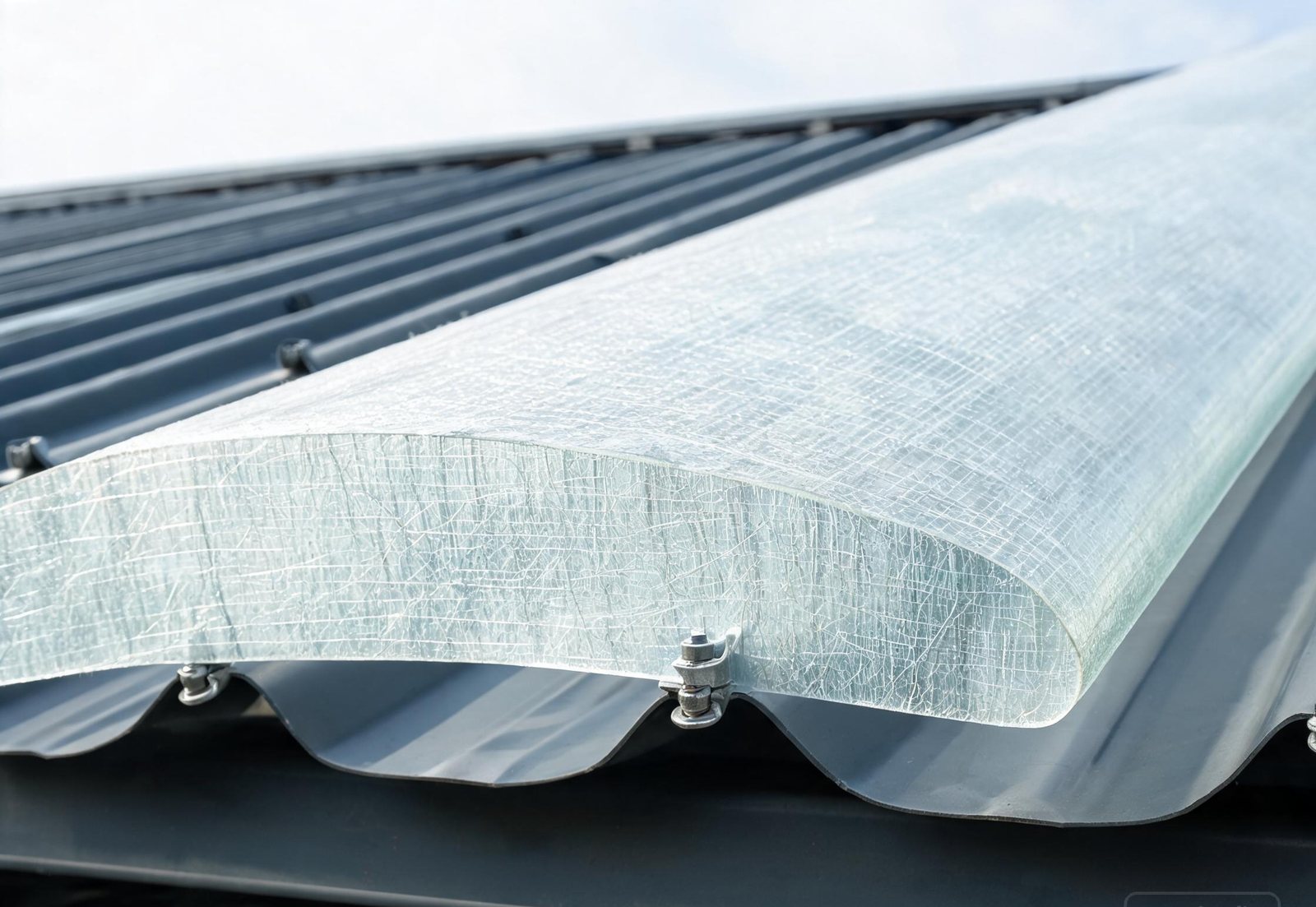
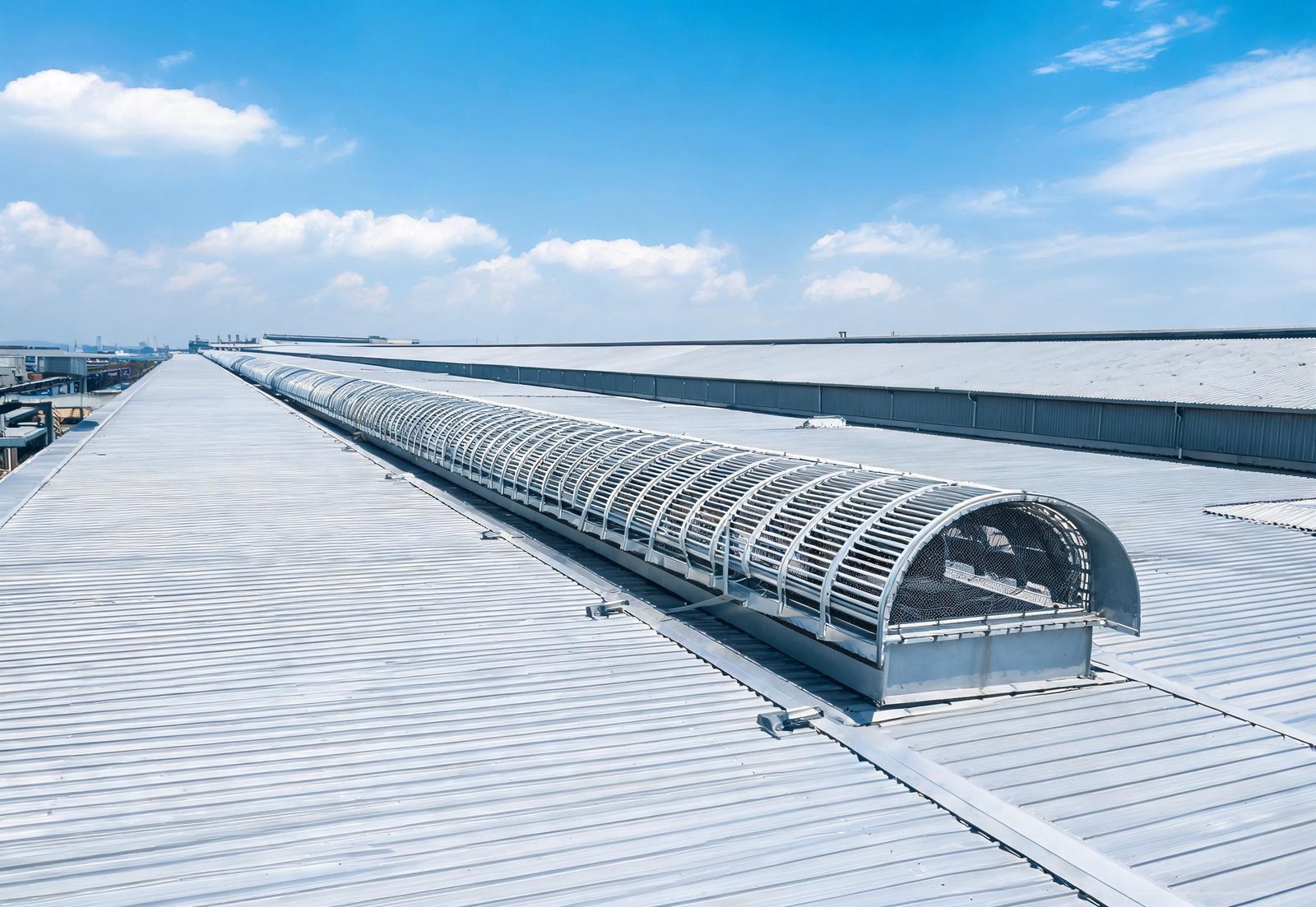
In a large warehouse, heat and humidity accumulate under the roof faster than most project teams expect. A ridge ventilator is a simple device, but its performance depends on a sizing calculation that is often skipped in favour of a rule of thumb.
Calculate the airflow requirement first
Start from the required air change rate, the internal heat load and — where applicable — the smoke ventilation strategy. Each gives a different target, and the largest one governs the design.
The ventilator is then sized to the required extract area, not to the length of the ridge. A continuous unit along the full ridge may still be undersized if its effective throat is reduced by screens, dampers or structural members.
Throat area is the number that matters
Nominal width is a marketing dimension. Effective throat area is the engineering dimension:
- Free area after bird screens, dampers and structural members are deducted.
- Curb height and roof pitch, which change the discharge path and the pressure distribution.
- The number and position of internal partitions, which can isolate zones from the ridge.
Wind, rain and maintenance
Prevailing wind and rain exposure determine whether a 300 mm or 600 mm throat is appropriate. A ventilator that is oversized for the exposure will draw rain; one that is undersized will not extract the design airflow.
Specify baffles and drainage, and provide a walkable curb with safe access for cleaning. Screens clog, and a clogged ventilator is no longer part of the ventilation strategy.
Key takeaways
- Size by airflow and effective throat area, not by ridge length.
- Check wind-driven rain exposure before selecting throat height.
- Plan access for cleaning and inspection from the design stage.