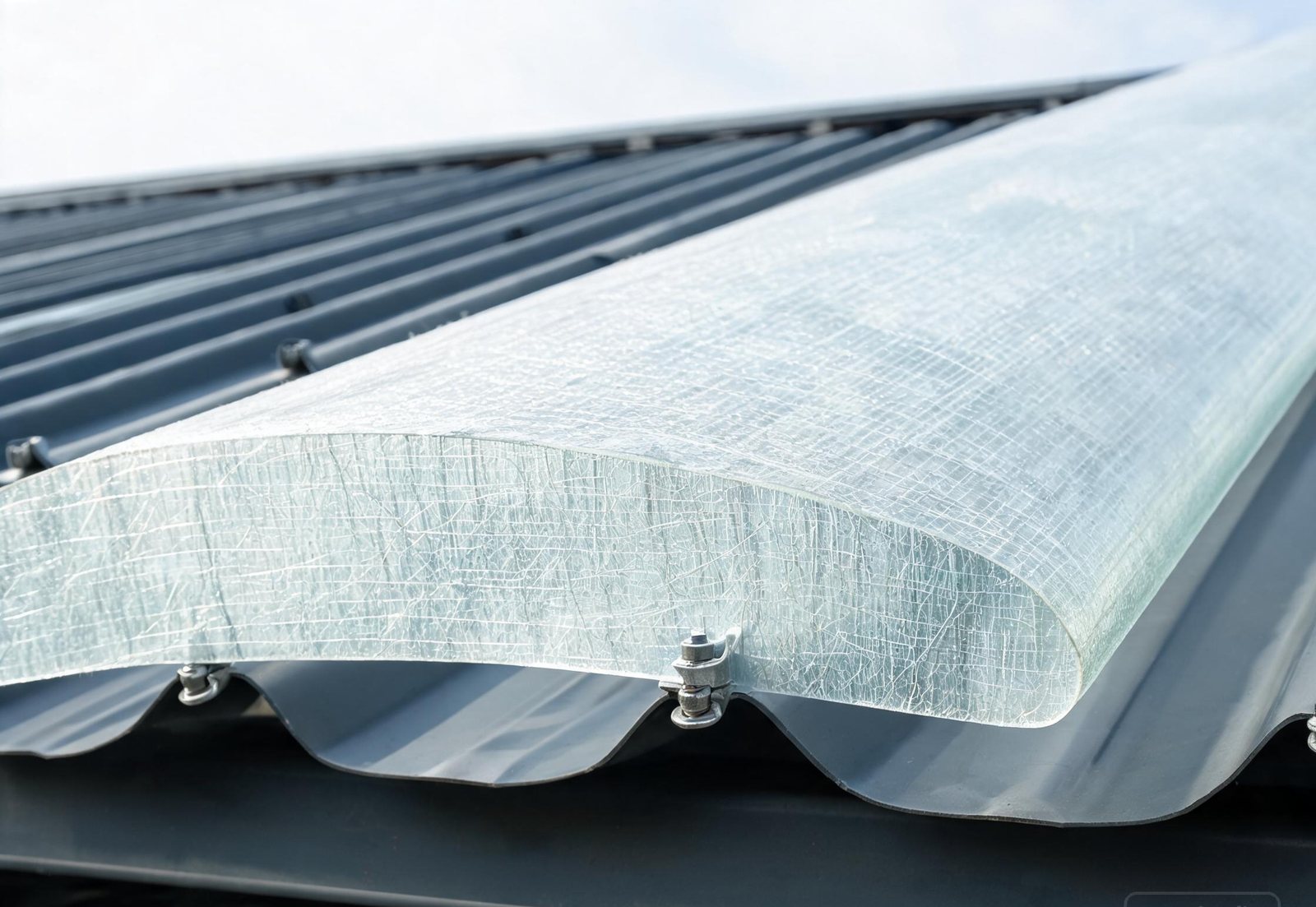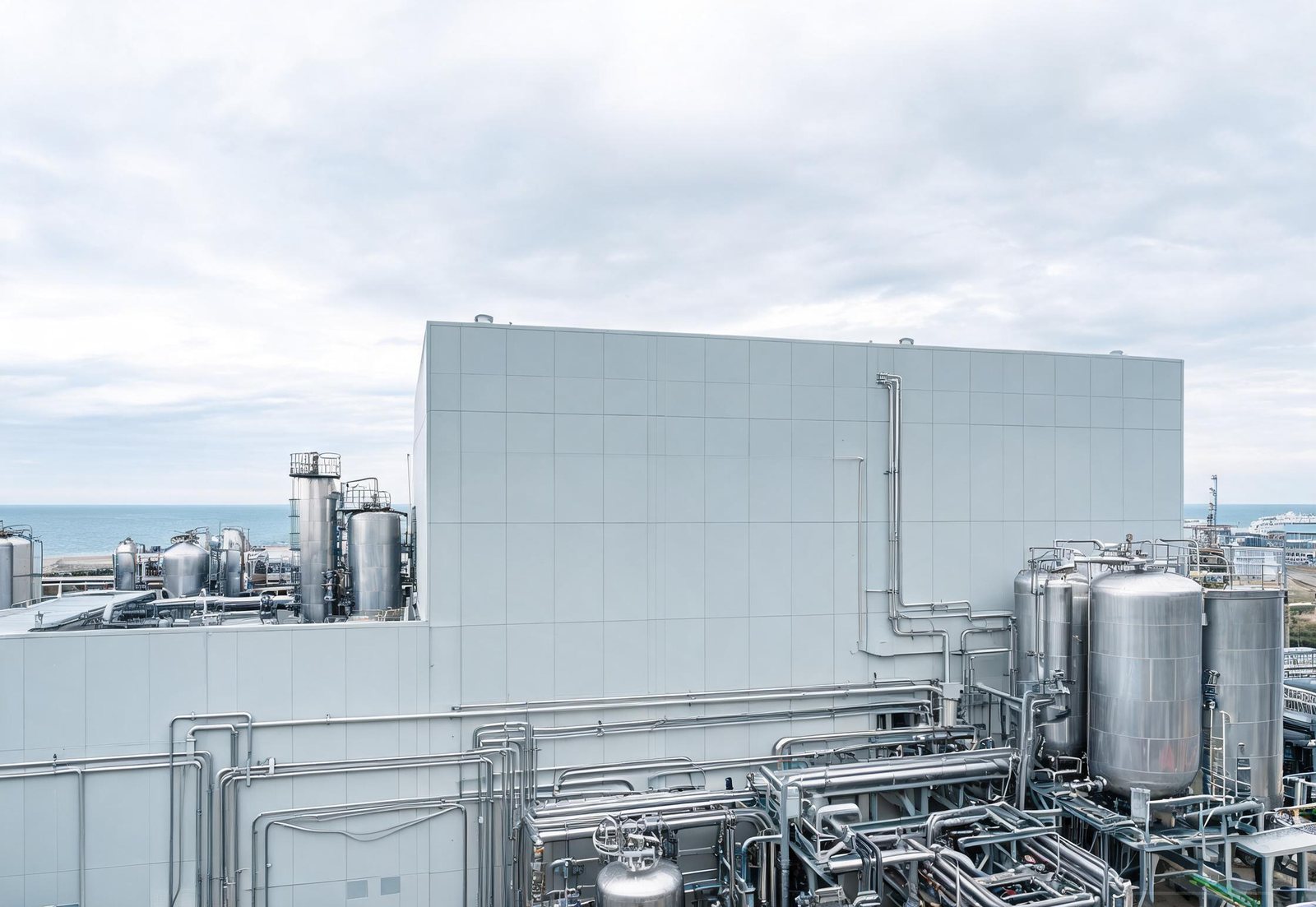

A cold-chain building is judged by its worst detail, not its best panel. Thermal bridges at joints, penetrations and structural connections cause condensation, ice formation and energy loss that the panel’s U-value never predicts.
The panel is rarely the weak point
Modern insulated panels achieve their declared thermal performance in laboratory conditions. On site, that performance is reduced by every fixing that passes through the insulation and every joint that is not fully sealed.
The design should treat the envelope as a continuous thermal layer, with the structure either inside or outside that layer — not crossing it repeatedly.
Joints, penetrations and thresholds
Typical problem areas on a cold-store project include:
- Panel joints where the tongue-and-groove seal is interrupted by a structural bracket.
- Pipe and cable penetrations that are sealed for air but not for vapour.
- Door thresholds and dock levellers, where the insulated envelope meets moving equipment.
Condensation control and vapour tightness
The vapour barrier must be continuous on the warm side and connected to the panel joints with a compatible tape or membrane. A gap of a few millimetres is enough to allow moist air into the insulation.
Commissioning should include a visual inspection of every joint and penetration, and a record of the sealant and tape used. Remedial work after the cold store is running is far more expensive than detailing it correctly the first time.
Key takeaways
- Design the insulation as a continuous layer around the structure.
- Detail penetrations for vapour tightness, not only for air tightness.
- Inspect and record every joint before commissioning the cold store.